The Anti-Inflammatory Diet
Foundation Principle
"Every meal is either adding fuel to the inflammatory fire or helping to extinguish it." — Dr. Sarah Chen
Why Diet Matters
Bram's pre-recovery diet was a disaster:
| Meal | Typical Choice |
|---|---|
| Breakfast | Coffee and donuts from gas station |
| Lunch | Fast food from the truck |
| Dinner | Frozen pizza, canned soup, takeout |
| Vegetables | "Ketchup counts, right?" |
| Drinks | 2–3 beers most nights |
When Dr. Chen reviewed his food diary: "We're going to change this. And I know you're going to hate it at first."
She was right. But she also explained why each change mattered, which made all the difference.
Understanding Inflammatory Foods
The Fuel for Your Fire
Processed foods and sugar:
- Spike insulin levels, creating metabolic stress1
- Feed systemic inflammation through multiple pathways
- May feed fungal/yeast overgrowth in gut
- Deplete nutrients needed for healing
- Create blood sugar swings that worsen fatigue
Gluten:
- Can be cross-reactive with mold antibodies (body mistakes gluten proteins for mycotoxins)2
- Increases intestinal permeability ("leaky gut")3
- Common trigger for inflammatory responses
- Even without celiac disease, many inflammatory conditions improve without gluten
Dairy (especially conventional):
- A1 casein (in most cow's milk) is inflammatory for many people4
- Lactose can feed bacterial overgrowth
- Often contains hormones and antibiotics
- Common allergen/sensitivity
Inflammatory oils:
- Canola, vegetable, soybean, corn oils
- High in omega-6 fatty acids (pro-inflammatory)
- Often oxidized during processing
- Disrupt omega-3/omega-6 balance (should be ~1:1, typical American diet is 20:1)5
Alcohol:
- Stresses liver detox pathways
- Increases gut permeability6
- Disrupts sleep architecture
- Directly inflammatory
- Depletes B vitamins and magnesium
Phase 1: Elimination (Weeks 1–4)
What to Remove
Foods to Eliminate
Completely remove for minimum 4 weeks:
- All processed/packaged foods
- Added sugars (including "natural" sugars like honey, maple syrup)
- Gluten (wheat, barley, rye, and hidden sources)
- Dairy (milk, cheese, yogurt, butter)
- Inflammatory oils (canola, vegetable, soybean, corn)
- Alcohol (all forms)
- Fast food and restaurant food (can't control ingredients)
The First Week Reality
The first week was brutal for Bram. He felt deprived, irritable, and constantly hungry.
His usual gas station stop became awkward:
- Greek yogurt? Dairy.
- Sandwich? Gluten.
- Protein bar? Sugar and processed ingredients.
- Energy drink? Liquid sugar.
He grabbed hard-boiled eggs and an apple, walked out feeling like he'd failed at breakfast.
This is normal. Your body is addicted to the blood sugar rollercoaster. It takes about two weeks to adapt to stable energy from real food.
Week 2: The Turning Point
By week two, something shifted:
- Constant hunger faded
- Energy became more stable—no more 2 PM crashes
- Food started tasting different
An apple was sweet. Like, actually, naturally sweet. Chicken had flavor without needing sauce. Brussels sprouts were delicious, not bitter.
Taste Bud Recalibration
When you eat sugar and processed foods constantly, you stop tasting real food properly. Your palate adapts to artificial flavors and excessive sweetness. Give it 2–3 weeks—real food will taste dramatically better.
Phase 2: Addition (Weeks 4–12)
Once inflammatory foods are out, add targeted healing foods.
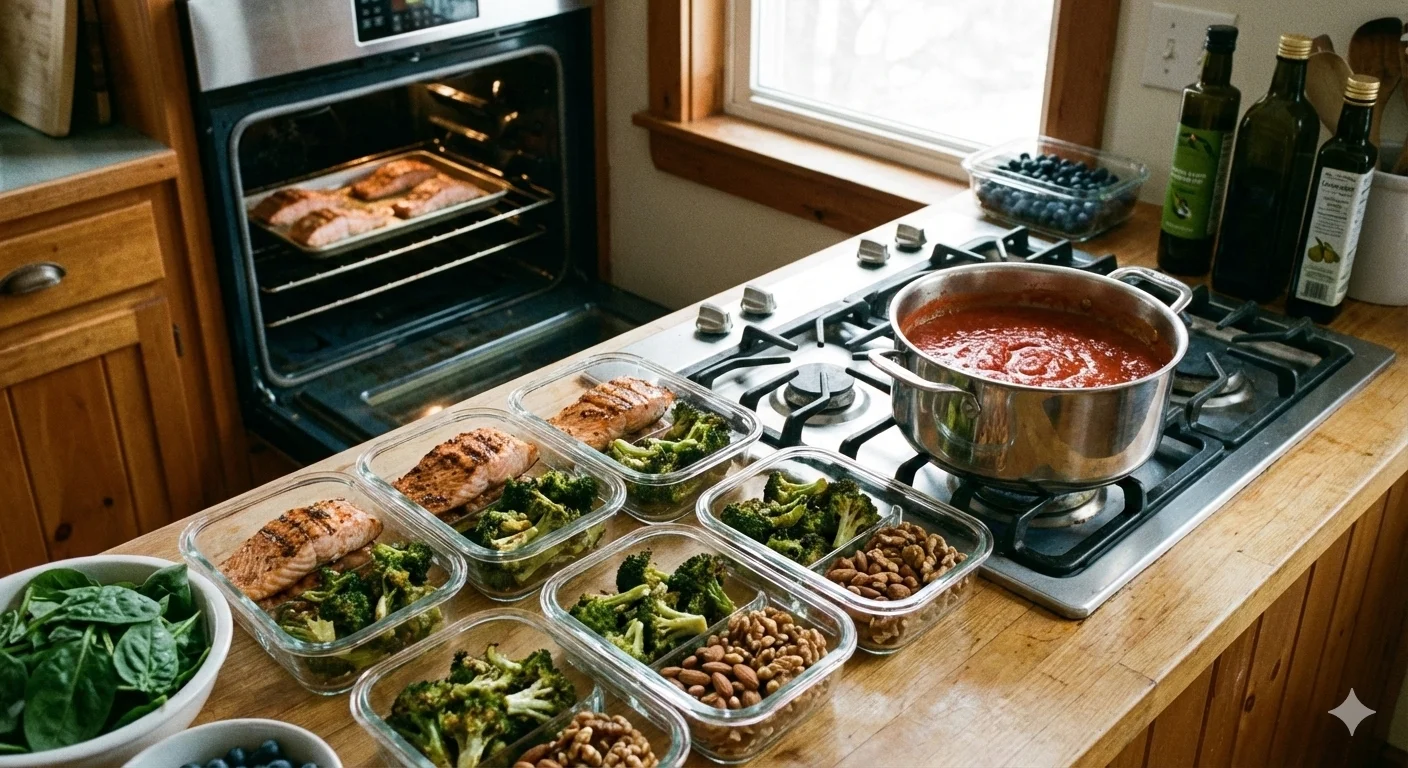
Fatty Fish: Omega-3 Powerhouse
Target: 3 servings per week minimum
Best choices:
- Wild-caught salmon
- Sardines (fresh or canned in water)
- Mackerel
- Anchovies
- Herring
Why it matters:
- EPA and DHA (omega-3 fatty acids) directly reduce inflammatory cytokines7
- Studies show significant reduction in joint pain and stiffness8
- Supports brain health (reduces neuroinflammation from mold)
- Improves cell membrane function
Bram's Go-To Salmon Recipe
- Pat salmon dry
- Coat with olive oil
- Season with salt, pepper, garlic powder
- Grill skin-side down for 6 minutes
- Flip for 2–3 minutes
- Squeeze fresh lemon over top
Simple. Delicious. Healing.

Colorful Vegetables: The Phytonutrient Spectrum
Target: Every meal should have vegetables
Purple/Red (Anthocyanins):
- Berries, purple cabbage, beets, red onion
- Powerful antioxidants9
- Reduce oxidative stress
- Support cognitive function
Cruciferous (Sulforaphane):
- Broccoli, cauliflower, Brussels sprouts, kale
- Support liver detoxification (Phase 2 enzymes)10
- Anti-cancer properties
- Reduce inflammation
Leafy Greens (Magnesium, Folate):
- Kale, spinach, arugula, Swiss chard
- Magnesium for muscle and nerve function
- Folate for DNA repair and methylation
- Chlorophyll supports detoxification
Bram's Vegetable Breakthrough
"I've been missing out for 45 years." — After his first batch of properly roasted Brussels sprouts
The technique:
- Cut Brussels sprouts in half
- Toss with olive oil and sea salt
- Roast at 425°F for 25–30 minutes, stirring once
- Edges should be crispy and caramelized
Turmeric and Ginger: Nature's NSAIDs
Dr. Chen was emphatic: "These aren't optional. They're medicine disguised as spices."
Curcumin (from turmeric):
- Inhibits COX-2 enzyme (same mechanism as pharmaceutical NSAIDs)11
- Reduces multiple inflammatory pathways
- Studies show effectiveness comparable to ibuprofen for joint pain12
- Neuroprotective (helps with brain fog)
Gingerol (from ginger):
- Anti-inflammatory and antioxidant13
- Reduces muscle pain and soreness
- Supports digestion
- Reduces nausea
Critical Detail
Black pepper with turmeric always. Piperine (in black pepper) increases curcumin absorption by 2000%.14 Without it, most curcumin passes through unabsorbed.
Golden Milk Recipe:
- 2 cups coconut milk (full-fat)
- 1 tsp turmeric powder
- 1/2 tsp ginger powder
- 1/4 tsp black pepper
- 1 tsp raw honey (optional, after initial elimination phase)
- Pinch of cinnamon
Heat gently, whisk until smooth, drink warm. Bram drank this every evening.
Bone Broth: Liquid Gold
Why bone broth matters:
- Rich in collagen, gelatin, and glycine15
- Provides amino acids for cartilage repair
- Contains glucosamine and chondroitin (joint support)
- Supports gut lining (common issue with mold illness)16
- Easy to digest when appetite is low
Bram's Sunday Bone Broth Ritual:
- Collect bones from week's meals (chicken carcasses, beef bones)
- Place in large pot or slow cooker
- Add: celery, carrots, onion (rough chopped), garlic, bay leaves
- Add 2 tbsp apple cider vinegar (helps extract minerals)
- Cover with water
- Simmer 24 hours (slow cooker on low)
- Strain, portion into jars
One cooking session = meals for the week.
Usage: 8 oz twice daily—morning and evening, hot, with sea salt.
The Meal Prep System
Sunday Afternoon (2–3 hours)
| Time | Task |
|---|---|
| 2:00 PM | Start bone broth in slow cooker |
| 2:15 PM | Prep vegetables (wash, cut, portion for roasting) |
| 2:30 PM | Season and grill proteins (chicken, salmon, beef) |
| 3:00 PM | Roast vegetables while proteins rest |
| 3:45 PM | Hard-boil eggs |
| 4:00 PM | Portion everything into containers |
| 4:30 PM | Make golden milk concentrate for the week |
| Monday 2:00 PM | Strain and jar bone broth |
Total active time: About 2.5 hours for a week of healing food
Investment: $60–80 for organic, high-quality ingredients
Return: Energy, reduced pain, faster healing, mental clarity
Need More Structure?
For detailed meal plans, shopping lists, and batch cooking schedules, see the Meal Planning Guide.
Sample Day
Breakfast:
- Scrambled eggs (2–3) with sautéed vegetables and ground beef
- Avocado half
- Mushroom coffee (lion's mane + cordyceps)
- Supplements
Lunch:
- Grilled salmon over mixed greens
- Olive oil and lemon dressing
- Roasted sweet potato
Dinner:
- Grass-fed beef patty (no bun)
- Roasted Brussels sprouts and broccoli
- Side of bone broth
- Golden milk for dessert
Snacks (if needed):
- Hard-boiled eggs
- Raw vegetables with guacamole
- Apple with almond butter
- Handful of walnuts
Social Challenges
Eating Out
Restaurants became minefields. Everything has gluten, dairy, or inflammatory oils.
Bram's strategies:
- Call ahead and ask about ingredient modifications
- Order simply: grilled protein + vegetables + olive oil
- Skip the bread basket (hardest part)
- Bring own salad dressing if needed
- Accept paying restaurant prices for basic food
Social Pressure
"One beer won't kill you." "You're being extreme." "Life's too short to eat like that."
Bram learned to have a simple script:
"I'm healing from a serious health condition. This diet is medicine for me. I appreciate you respecting that."
Most people backed off. Some didn't. Bram learned who his real friends were.
The 80/20 Rule (Month 4+)
Once solidly improved, Dr. Chen introduced flexibility:
"If you're eating clean 80–90% of the time, the occasional 10–20% won't derail you. But know your triggers. If gluten makes you feel terrible for three days, maybe that's not worth it."
Bram's balance:
- Strict during the week
- Slightly flexible on weekends
- Complete avoidance of gluten (his biggest trigger)
- Occasional dairy (didn't bother him much)
- Rare alcohol (special occasions only, quality over quantity)
The Inflammation Response
The objective improvements were undeniable:
| Timeframe | Changes |
|---|---|
| Week 2 | Hands less swollen, especially after eliminating gluten and dairy |
| Week 3 | Digestive issues gone—no more bloating, no more afternoon food coma |
| Week 4 | Energy levels stabilized—clear thinking all day, not just mornings |
| Month 2 | CRP dropped significantly on retest |
| Month 3 | Pain levels consistently 3–4/10 instead of 7–8/10 |
Quick Reference: Yes/No Lists
Always Yes
- Wild-caught fatty fish
- Grass-fed/pasture-raised meats
- All vegetables (especially cruciferous and colorful)
- Healthy fats (olive oil, avocado, coconut oil)
- Bone broth
- Herbs and spices (especially turmeric, ginger)
- Berries (low-sugar fruits)
- Nuts and seeds (moderate amounts)
- Eggs (pasture-raised)
Always No (During Elimination)
- Processed foods (anything in a package with ingredients you can't pronounce)
- Added sugars (all forms)
- Gluten grains (wheat, barley, rye)
- Dairy products
- Industrial seed oils (canola, vegetable, soybean, corn)
- Alcohol
- Fast food
Test Later (Reintroduce One at a Time)
- Gluten-free grains (rice, quinoa, oats)
- Legumes (beans, lentils)
- Nightshades (tomatoes, peppers, eggplant)—inflammatory for some
- Grass-fed dairy (butter, ghee, hard cheeses)
- Coffee (inflammatory for some, fine for others)
The Bottom Line
"I spent 20 years eating whatever was convenient," Bram wrote. "Gas station breakfasts, fast food lunches, frozen dinners. My body was screaming for nutrients and getting garbage.
"Now I spend 2.5 hours on Sunday making real food for the week. My grocery bill is higher. My energy is higher too. My pain is lower. My brain works again.
"The math is simple: invest a little time and money in quality food, or pay with your health. I tried the second option. I don't recommend it."
Continue to Supplement Protocol or return to Protocols Overview
-
Spreadbury I. "Comparison with ancestral diets suggests dense acellular carbohydrates promote an inflammatory microbiota." Diabetes Metab Syndr Obes 2012;5:175-189. ↩
-
Vojdani A, Tarash I. "Cross-Reaction between Gliadin and Different Food and Tissue Antigens." Food Nutr Sci 2013;4:20-32. ↩
-
Fasano A. "Zonulin and its regulation of intestinal barrier function: the biological door to inflammation, autoimmunity, and cancer." Physiol Rev 2011;91(1):151-175. ↩
-
Pal S, et al. "Milk Intolerance, Beta-Casein and Lactose." Nutrients 2015;7(9):7285-7297. ↩
-
Simopoulos AP. "The importance of the ratio of omega-6/omega-3 essential fatty acids." Biomed Pharmacother 2002;56(8):365-379. ↩
-
Bishehsari F, et al. "Alcohol and Gut-Derived Inflammation." Alcohol Res 2017;38(2):163-171. ↩
-
Calder PC. "Omega-3 fatty acids and inflammatory processes: from molecules to man." Biochem Soc Trans 2017;45(5):1105-1115. ↩
-
Goldberg RJ, Katz J. "A meta-analysis of the analgesic effects of omega-3 polyunsaturated fatty acid supplementation for inflammatory joint pain." Pain 2007;129(1-2):210-223. ↩
-
Khoo HE, et al. "Anthocyanidins and anthocyanins: colored pigments as food, pharmaceutical ingredients, and the potential health benefits." Food Nutr Res 2017;61(1):1361779. ↩
-
Houghton CA, et al. "Sulforaphane and Other Nutrigenomic Nrf2 Activators: Can the Clinician's Expectation Be Matched by the Reality?" Oxid Med Cell Longev 2016;2016:7857186. ↩
-
Menon VP, Sudheer AR. "Antioxidant and anti-inflammatory properties of curcumin." Adv Exp Med Biol 2007;595:105-125. ↩
-
Kuptniratsaikul V, et al. "Efficacy and safety of Curcuma domestica extracts compared with ibuprofen in patients with knee osteoarthritis: a multicenter study." Clin Interv Aging 2014;9:451-458. ↩
-
Mashhadi NS, et al. "Anti-oxidative and anti-inflammatory effects of ginger in health and physical activity: review of current evidence." Int J Prev Med 2013;4(Suppl 1):S36-42. ↩
-
Shoba G, et al. "Influence of piperine on the pharmacokinetics of curcumin in animals and human volunteers." Planta Med 1998;64(4):353-356. ↩
-
Shoulders MD, Raines RT. "Collagen structure and stability." Annu Rev Biochem 2009;78:929-958. ↩
-
Samonina G, et al. "Protection of gastric mucosal integrity by gelatin and simple proline-containing peptides." Pathophysiology 2000;7(1):69-73. ↩