Medicinal Mushrooms
The Irony
"Poisoned by one type of fungus, healed by another."
The man who nearly lost his career to toxic mold became a passionate mycophile—mushroom lover.
The Discovery
Three months into recovery, Bram stumbled across a forum post:
"If mold can make you sick, mushrooms can make you well. Different species, different compounds, but both are fungi. Nature provides both poison and medicine."
His first reaction: After everything fungus did to me, I'm supposed to intentionally consume more of it?
But curiosity won. He clicked deeper. Studies. Centuries of traditional use. Modern research backing ancient wisdom.
Emma brought home a bottle of reishi extract:
"Dad, this is supposed to help with inflammation and sleep. It's been used in Chinese medicine for thousands of years."
Bram looked at the dark bottle suspiciously.
"It's made from mushrooms."
"Yes. Good mushrooms. Medicine mushrooms. It's like saying you won't eat strawberries because poison ivy is also a plant."
The logic was sound. He tried it.
The Key Species
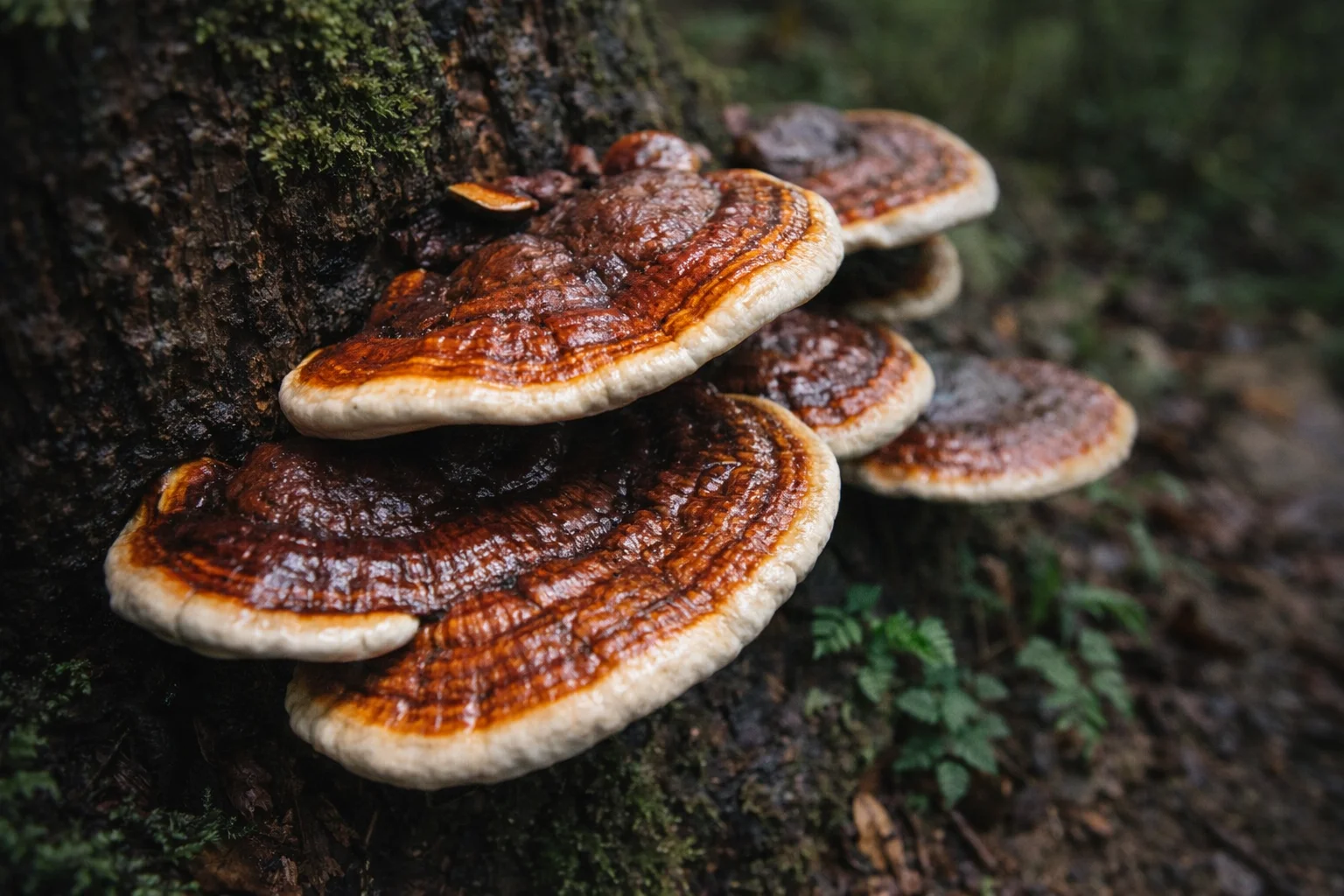
Reishi (Ganoderma lucidum) — "The Mushroom of Immortality"
Learn More
For an in-depth herbalist perspective including clinical applications and research citations, see Richard Whelan's Reishi monograph.
Traditional use: Over 2,000 years in Chinese medicine for longevity, immune support, and spiritual potency1
Modern research supports:
| Effect | Mechanism |
|---|---|
| Immune modulation | Beta-glucans regulate immune response2 |
| Anti-inflammatory | Triterpenes reduce inflammatory cytokines3 |
| Sleep quality | GABAergic effects promote deeper sleep4 |
| Stress adaptation | Classified as adaptogen |
| Liver support | Supports detoxification pathways |
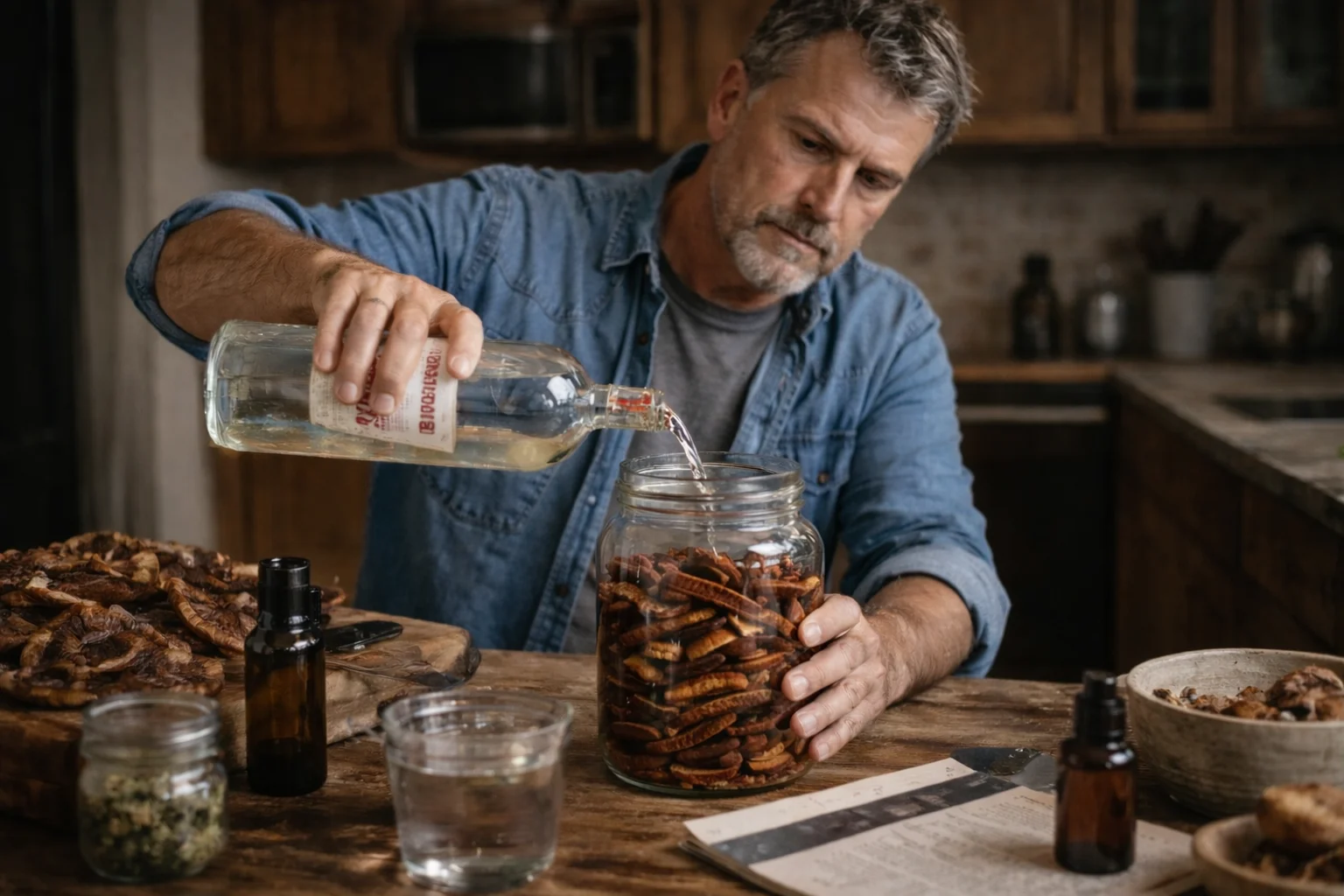
How Bram used it:
- Dual extraction tincture (water + alcohol extract)
- 2ml twice daily: morning (in coffee) and evening (under tongue)
- Consistent daily use
Why dual extraction matters: Water extracts polysaccharides (immune compounds). Alcohol extracts triterpenes (anti-inflammatory compounds). You need both for full benefit.
Bram's experience:
| Timeline | Observation |
|---|---|
| Week 1–2 | Nothing obvious (skeptical) |
| Week 3 | Sleeping through the night consistently |
| Week 6 | CRP dropped noticeably at blood retest |
| Month 3 | Deep bone-tired fatigue had lifted significantly |
The taste: Intensely bitter. Bram initially hated it, then grew to appreciate the bitterness as "the taste of medicine that works."
Lion's Mane (Hericium erinaceus) — "The Brain Mushroom"
Traditional use: Culinary delicacy and cognitive support in East Asian medicine
Modern research supports:
| Effect | Mechanism |
|---|---|
| Nerve growth | Hericenones and erinacines stimulate NGF production5 |
| Neuroprotection | May help repair nerve damage6 |
| Cognitive function | Improves focus, memory, mental clarity7 |
| Gut-brain axis | Supports gut lining integrity |
Why it mattered for Bram:
His "brain fog"—difficulty concentrating, forgetting appointments, word-finding issues—was likely neuroinflammation from mold exposure. Lion's mane specifically addresses this.
How Bram used it:
- Powder: 1–2 grams daily in morning coffee
- Capsules: 500mg twice daily (standardized extract)
- Fresh lion's mane when available (culinary—delicious!)
Bram's experience:
| Timeline | Observation |
|---|---|
| Week 2 | Mental fog starting to lift |
| Week 4 | Not losing train of thought mid-sentence |
| Week 8 | Memory sharper—remembering measurements without writing everything down |
| Month 4 | Crew commented "You seem more like yourself" |
The breakthrough moment: Realizing the cognitive decline he'd attributed to "getting old and sick" was actually treatable, reversible neuroinflammation.
Cordyceps (Cordyceps militaris) — "The Energy Mushroom"
Traditional use: Tibetan and Chinese medicine for vitality, endurance, and respiratory health8
Modern research supports:
| Effect | Mechanism |
|---|---|
| ATP production | Increases cellular energy at mitochondrial level9 |
| Oxygen utilization | Improves VO2 max and physical endurance10 |
| Anti-fatigue | Reduces physical and mental exhaustion |
| Anti-inflammatory | COX-2 inhibition11 |
Why it mattered for Bram:
The crushing fatigue—needing to lie down after just hours of work—was likely mitochondrial dysfunction from chronic inflammation. Cordyceps addresses energy at the cellular level.
How Bram used it:
- Powder in coffee: 1 gram before work
- Capsules: 1,000mg before demanding work days
- Cycling: 5 days on, 2 days off (prevents tolerance)
Bram's experience:
| Timeline | Observation |
|---|---|
| Week 1 | Subtle energy increase, less 2 PM crash |
| Week 3 | Could work full day without needing to lie down in truck |
| Week 6 | Stamina for physical therapy improved dramatically |
| Month 3 | Felt like physical capacity had returned |
Timing Matters
Cordyceps is energizing. Bram learned not to take it after 2 PM or sleep suffered.
Chaga (Inonotus obliquus) — "The Antioxidant Powerhouse"
Traditional use: Siberian and Northern European folk medicine for immune support and longevity
Modern research supports:
| Effect | Mechanism |
|---|---|
| Antioxidant | Among highest ORAC values of any food12 |
| SOD activity | Contains superoxide dismutase enzyme |
| Immune modulation | Beta-glucans support immune balance13 |
| DNA protection | May protect against oxidative damage |
How Bram used it:
- Chaga tea: Simmer chunks in water for 2–4 hours
- Makes a week's supply
- 8 oz twice daily (tastes like mild, woody coffee)
- Sometimes added to actual coffee for extra depth
The ritual: Sunday afternoon, Bram would make a big batch of chaga tea. The slow simmer, the earthy smell, the intentional preparation became meditative practice.
Turkey Tail (Trametes versicolor) — "The Immune Balancer"
Traditional use: Used in Traditional Chinese Medicine and increasingly in modern integrative oncology
Modern research supports:
| Effect | Mechanism |
|---|---|
| Immune modulation | PSK and PSP polysaccharides14 |
| Gut microbiome | Prebiotic effects support beneficial bacteria15 |
| Immune precision | Not just "boosting"—intelligent regulation |
Why it mattered for Bram:
His autoimmune-like symptoms (body attacking own joints) suggested immune dysregulation. Turkey tail helps teach the immune system to respond appropriately, not overreact.
How Bram used it:
- Capsules: 1,000mg three times daily with meals
- Sometimes brewed as tea with reishi
Bram's experience:
| Timeline | Observation |
|---|---|
| Month 2–3 | Fewer inflammatory flare-ups |
| Month 4 | Pattern of "good days and bad days" smoothed out |
| Month 6 | Hadn't had a major flare in weeks |
The Complete Mushroom Protocol
Daily Stack
| Time | Mushroom | Form | Dose |
|---|---|---|---|
| Morning | Lion's Mane | Powder in coffee | 1–2g |
| Morning | Cordyceps | Powder in coffee | 1g |
| Morning | Chaga | Tea | 8 oz |
| With meals | Turkey Tail | Capsules | 1,000mg 3x |
| Evening | Reishi | Tincture | 2ml |
| Evening | Chaga | Tea | 8 oz |
Weekly Ritual
Sunday: Make chaga tea for the week, check mushroom supplies, harvest from home cultivation if growing.
Quality Matters Enormously
The Supplement Industry Problem
Many mushroom products are:16
- Grown on grain (mycelium on oats, not actual fruiting bodies)
- Diluted with starch filler
- Not properly extracted
- Mislabeled or contaminated
What to look for:
| Quality Marker | Why It Matters |
|---|---|
| Fruiting body extract17 | Actual mushroom, not grain-grown mycelium |
| Beta-glucan content listed | Active compound—should be >20% |
| Dual extraction (for reishi) | Gets both water and alcohol-soluble compounds |
| Third-party testing | Verifies contents and checks for contaminants |
| Organic certification | Mushrooms bioaccumulate toxins from environment |
| Transparent sourcing | Know where your mushrooms come from |
Red flags:
- "Mycelium on grain" or "myceliated grain" (mostly starch, not mushroom)
- No beta-glucan content listed
- Dramatically cheaper than competitors
- Proprietary blends hiding actual amounts
Trusted brands:
- Host Defense (Paul Stamets' company)
- Real Mushrooms
- Four Sigmatic
- Fungi Perfecti
- Om Mushrooms
Growing Your Own
By month 6, Bram was cultivating several species at home:
Easy to grow:
- Lion's mane (fruiting blocks)
- Oyster mushrooms (various substrates)
- Shiitake (logs or blocks)
Benefits of home cultivation:
- Freshest possible product
- Know exactly what went into it
- Cost savings over time
- Deeply satisfying hobby
- Connection to the medicine
Caution for mold-sensitive individuals:
Home cultivation involves fungal spores. If you have active mold illness or compromised immunity, this may not be appropriate until you've recovered. Start with purchased products.
Safety Considerations
Generally Safe
Medicinal mushrooms have been used for thousands of years with excellent safety records.18 However:
Potential Interactions
| Mushroom | Consideration |
|---|---|
| Reishi | May enhance blood thinner effects; may lower blood pressure19 |
| Lion's Mane | Generally very safe; rare reports of skin sensitivity |
| Cordyceps | May affect blood sugar; caution with diabetes medications |
| Chaga | High oxalate content—caution with kidney issues20 |
| Turkey Tail | May interact with immunosuppressants |
Always inform your healthcare providers about mushroom supplements.
Start Slowly
- Begin with one species
- Use for 2–3 weeks before adding another
- This way you can identify what's helping (or causing issues)
Quality Over Quantity
Better to use one high-quality mushroom product than five cheap ones.
Common Questions
Can I just eat culinary mushrooms?
Culinary mushrooms (shiitake, maitake, oyster) have health benefits and should be part of your diet. But they don't provide therapeutic doses of the specific compounds in medicinal extracts. Think of food mushrooms as maintenance, extracts as medicine.
How long until I notice effects?
- Reishi: Sleep effects in 1–2 weeks; immune/anti-inflammatory effects over months
- Lion's Mane: Cognitive effects in 2–4 weeks
- Cordyceps: Energy effects often within first week
- Chaga: Subtle, cumulative—hard to pinpoint
- Turkey Tail: Immune modulation over weeks to months
Can I take too much?
Medicinal mushrooms have wide safety margins. Following label directions is unlikely to cause problems. However, "more is better" doesn't apply—therapeutic doses work; megadoses don't work better and waste money.
Are these legal?
Medicinal mushrooms (reishi, lion's mane, cordyceps, chaga, turkey tail) are completely legal—they're food/supplement products, not controlled substances. Note: This is different from psilocybin mushrooms, which are controlled.
Do they conflict with the mold illness?
Different species, different compounds. Toxic molds produce mycotoxins. Medicinal mushrooms produce beneficial beta-glucans, triterpenes, and other healing compounds. Many people recovering from mold illness find medicinal mushrooms helpful.
The Transformation
Year one with medicinal mushrooms:
- Growing 6 species at home
- Foraging seasonally (with proper identification)
- Using 5 different medicinal varieties daily
- Cooking with mushrooms 4–5 times per week
- Teaching cultivation to others
- Making own extracts
The symbolic journey:
Poisoned by fungus → Fear of fungus → Curiosity about fungus →
Learning about fungus → Healed by fungus → Teaching about fungus
"It's not ironic. It's the perfect illustration of complexity and nuance. Nature provides both poison and medicine. Often from the same kingdom, sometimes from the same genus. The difference is context, species, and knowledge.
Fearing all fungus because some are toxic is like fearing all plants because poison ivy exists. You have to develop discernment.
That's a metaphor for life, really. Things aren't simply good or bad. Context matters. Nuance matters. Understanding matters."
Return to Protocols Overview or continue to Resources
-
Wachtel-Galor S, et al. "Ganoderma lucidum (Lingzhi or Reishi): A Medicinal Mushroom." In: Herbal Medicine: Biomolecular and Clinical Aspects. 2nd ed. CRC Press/Taylor & Francis; 2011. ↩
-
Xu Z, et al. "Ganoderma lucidum polysaccharides: immunomodulation and potential anti-tumor activities." Am J Chin Med 2011;39(1):15-27. ↩
-
Cör D, et al. "Antitumour, Antimicrobial, Antioxidant and Antiacetylcholinesterase Effect of Ganoderma Lucidum Terpenoids and Polysaccharides: A Review." Molecules 2018;23(3):649. ↩
-
Cui XY, et al. "Extract of Ganoderma lucidum prolongs sleep time in rats." J Ethnopharmacol 2012;139(3):796-800. ↩
-
Mori K, et al. "Nerve growth factor-inducing activity of Hericium erinaceus in 1321N1 human astrocytoma cells." Biol Pharm Bull 2008;31(9):1727-1732. ↩
-
Lai PL, et al. "Neurotrophic properties of the Lion's mane medicinal mushroom, Hericium erinaceus." Int J Med Mushrooms 2013;15(6):539-554. ↩
-
Mori K, et al. "Improving effects of the mushroom Yamabushitake (Hericium erinaceus) on mild cognitive impairment: a double-blind placebo-controlled clinical trial." Phytother Res 2009;23(3):367-372. A randomized controlled trial showing cognitive improvement in older adults. ↩
-
The wild form (Cordyceps sinensis) is extremely rare and expensive. Most supplements use cultivated C. militaris, which contains similar active compounds. ↩
-
Hirsch KR, et al. "Cordyceps militaris Improves Tolerance to High-Intensity Exercise After Acute and Chronic Supplementation." J Diet Suppl 2017;14(1):42-53. ↩
-
Chen S, et al. "Effect of Cs-4 (Cordyceps sinensis) on exercise performance in healthy older subjects." J Altern Complement Med 2010;16(5):585-590. ↩
-
Won SY, Park EH. "Anti-inflammatory and related pharmacological activities of cultured mycelia and fruiting bodies of Cordyceps militaris." J Ethnopharmacol 2005;96(3):555-561. ↩
-
Cui Y, et al. "Antioxidant effect of Inonotus obliquus." J Ethnopharmacol 2005;96(1-2):79-85. ↩
-
Kim YR. "Immunomodulatory Activity of the Water Extract from Medicinal Mushroom Inonotus obliquus." Mycobiology 2005;33(3):158-162. ↩
-
Fritz H, et al. "Polysaccharide K and Coriolus versicolor extracts for lung cancer: a systematic review." Integr Cancer Ther 2015;14(3):201-211. PSK (polysaccharide-K) is approved as an adjunct cancer therapy in Japan. ↩
-
Pallav K, et al. "Effects of polysaccharopeptide from Trametes versicolor and amoxicillin on the gut microbiome of healthy volunteers." Gut Microbes 2014;5(4):458-467. ↩
-
Woolfe ML, Primrose MF. "Food Authenticity and Traceability: Chapter 28 on Natural Products." Woodhead Publishing, 2003. Consumer Reports and independent analyses have found significant discrepancies in mushroom supplement labeling. ↩
-
Fruiting body is the mushroom you recognize—the cap and stem. Mycelium is the root-like network that grows through substrate. Mycelium grown on grain often contains mostly grain starch, not mushroom compounds. ↩
-
Money NP. "Are mushrooms medicinal?" Fungal Biol 2016;120(4):449-453. Reviews safety data and historical use patterns. ↩
-
Wachtel-Galor S, et al. "Ganoderma lucidum (Lingzhi or Reishi)." In: Herbal Medicine. 2nd ed. 2011. Notes antiplatelet and hypotensive effects. ↩
-
Kikuchi Y, et al. "Oxalate nephropathy caused by excessive intake of Chaga mushroom." Clin Nephrol Case Stud 2020;8:33-37. ↩